HER SON ARRIVED WITH SUITCASES—THEN SHE ASKED WHAT HE WAS HIDING CHAPTER 2 — THE $214,000 HE NEVER TOLD THEM ABOUT
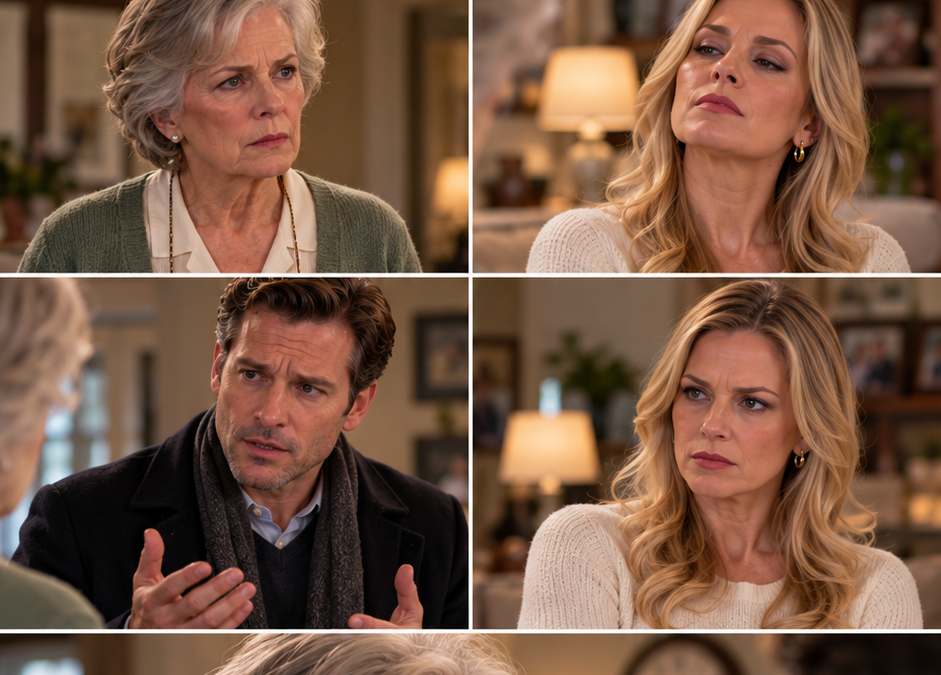
“Two hundred fourteen thousand dollars.”
Lennox repeated the number as though saying it differently might change it.
Terrence remained standing.
Mother did not.
She returned to her chair.
Her knees had begun to feel unreliable.
Not from age.
From mathematics.
$214,000.
The boutique accounted for perhaps $80,000.
Even less if Terrence’s twenty-five-thousand-dollar line was part of that total.
There was another problem.
A much older one.
Lennox stared at her husband.
“How?”
Terrence rubbed both hands over his face.
“It’s complicated.”
Mother almost laughed.
“No.”
She looked at him.
“It is arithmetic.”
He dropped his hands.
Lennox’s voice sharpened.
“Where did two hundred fourteen thousand dollars come from?”
Terrence looked toward Mother.
She said nothing.
No rescue.
Lennox stepped closer.
“Terrence.”
He finally sat.
His shoulders folded inward.
“Business.”
Lennox frowned.
“You don’t own a business.”
Mother knew differently.
Not now.
But once.
Terrence had tried.
Four years earlier, he and a friend named Caleb launched a small home-renovation company.
It lasted barely eighteen months.
Terrence told Mother he walked away without losing much.
He said he had learned an expensive lesson.
Mother had assumed expensive meant ten thousand.
Perhaps fifteen.
“How much from the contracting company?” Mother asked.
Terrence stared.
Lennox turned toward her.
“What contracting company?”
Mother’s stomach tightened.
“You never told her?”
Lennox looked toward Terrence.
His silence answered.
Mother remembered immediately.
The company existed before Terrence married Lennox.
It had failed less than a year before their wedding.
Mother had assumed Lennox knew.
Apparently not.
“What company?”
Lennox asked again.
Terrence exhaled.
“Caleb and I started one.”
“When?”
“Six years ago.”
“You’ve never mentioned this.”
“It was gone before we met seriously.”
“You told me you were freelancing.”
“I was.”
Mother looked at him.
“After the company collapsed.”
Terrence’s face tightened.
“Yes.”
Lennox sat on the edge of the sofa.
“How much?”
Terrence stared toward the old clock.
“About ninety-six.”
Mother’s breath caught.
“Ninety-six thousand dollars?”
He nodded.
Mother had not known.
That bothered her almost as much as Lennox’s ignorance.
She thought back.
The requests.
Small amounts.
A car repair.
A rent shortfall.
An “unexpected tax payment.”
Perhaps pieces of it had already reached her without names attached.
Lennox spoke slowly.
“You entered our marriage with almost one hundred thousand dollars in debt.”
Terrence’s face tightened.
“It wasn’t all active.”
“What does that mean?”
“Some was structured.”
“Debt is still debt.”
Mother almost looked toward Lennox in surprise.
The contemptuous daughter-in-law had vanished.
Now she sounded like a woman discovering the floor beneath her marriage had been false.
Terrence continued.
“I was paying it.”
“How?”
“Work.”
“What work?”
“Contracting.”
“And?”
Silence.
Mother watched.
There was always an and.
Lennox’s eyes narrowed.
“And what?”
Terrence looked toward Mother.
“No.”
Mother said it before he spoke.
His expression changed.
“Do not make me part of this until you say exactly what happened.”
He swallowed.
“I borrowed from Mom.”
Lennox turned.
Mother stared.
“When?”
Terrence looked toward her.
“Several times.”
“I gave you money several times.”
“Yes.”
“That is different.”
He looked down.
Mother’s chest tightened.
“How much of what I gave you went to old business debt?”
No answer.
“Terrence.”
“About thirty.”
Mother closed her eyes.
Thirty thousand dollars.
She had given him money over six years.
Some gifts.
Some supposed emergencies.
She had never totaled it.
“What did you tell me?”
Terrence’s voice cracked.
“Different things.”
Mother opened her eyes.
“What things?”
“Rent.”
“Taxes.”
“Car.”
“One medical bill.”
Mother stared.
“Was the medical bill real?”
“Yes.”
“Did my money pay it?”
Silence.
Mother felt sick.
“So even when the emergency was real, you used it to ask for money and then redirected some.”
“Yes.”
Lennox stood.
“You lied to your mother for years.”
Terrence looked at her.
“I was trying to clean it up.”
“And then you lied to me.”
“Yes.”
“Why?”
He rubbed his forehead.
“Because I was ashamed.”
Mother said quietly:
“Shame that becomes secrecy usually sends the bill somewhere else.”
Terrence looked toward her.
His eyes filled.
She had not intended the sentence to sound like his father.
It did.
For a moment she almost heard her husband.
Lennox paced two steps.
“What is the rest?”
Terrence stared.
“What?”
“The remaining debt.”
She counted.
“Ninety-six old business.”
“Roughly eighty boutique.”
“That is one seventy-six.”
Mother followed.
“Thirty-eight thousand missing.”
Terrence’s face changed.
Lennox stopped walking.
“What is it?”
He looked toward the window.
Mother’s stomach tightened.
“Terrence.”
“A tax issue.”
Lennox’s face fell.
“What tax issue?”
“Back taxes.”
“Whose?”
“Mine.”
“How much?”
“Thirty-eight.”
Mother closed her eyes.
Of course.
The number completed the total.
$214,000.
Not one catastrophe.
Three.
Old business debt.
Tax debt.
Boutique debt.
Layered.
Hidden.
Financed through new borrowing.
Mother understood the pattern.
Every time Terrence nearly escaped one obligation, he created another commitment before the old one was gone.
Lennox stared at him.
“When did you know?”
“About the tax debt?”
“Yes.”
“Last year.”
Her face hardened.
“Before we started planning the boutique.”
“Yes.”
“You let me put my savings into a business while knowing you owed thirty-eight thousand in taxes.”
Terrence’s expression broke.
“I thought the boutique would work.”
Mother looked at him.
There.
The sentence his father would have feared most.
Not because believing in a business was foolish.
Because Terrence had used future success to justify withholding present facts.
Lennox laughed bitterly.
“You thought my boutique would fix your debt.”
“No.”
“Then why did you let me risk everything?”
Terrence stood.
“Because it was a good idea.”
“That is not the question.”
He stopped.
Mother remained silent.
Lennox’s voice shook.
“I put thirty-eight thousand of my savings into that store.”
Terrence nodded.
“You knew if it failed we would have nothing.”
“I didn’t think it would fail.”
Lennox stared.
“You never think anything will fail.”
Silence.
That sentence found the center.
Terrence’s face changed.
Mother looked down at her wedding ring.
Her husband had said nearly the same thing once.
Terrence doesn’t prepare for failure because preparing feels like admitting it can happen.
Mother had defended him.
Now she wondered how many defenses become permissions when repeated long enough.
Lennox sat.
Her hands trembled.
For the first time, Mother felt something unexpected toward her.
Compassion.
Not absolution.
Lennox had arrived entitled.
She had looked around this small house and reduced Mother’s life to unused square footage.
That remained true.
But Lennox had also been deceived.
Both could exist.
Mother looked toward her.
“How much do you personally have left?”
Lennox stared.
“About eleven thousand.”
“Retirement?”
“Separate.”
“Do not touch it.”
Terrence looked toward Mother.
She ignored him.
Lennox nodded.
“I wasn’t planning to.”
“Good.”
Mother turned toward Terrence.
“How much do you have?”
He exhaled.
“About six.”
“Thousand?”
“Yes.”
“Retirement?”
“Twenty-eight.”
Mother stared.
“For a thirty-five-year-old man carrying over two hundred thousand in debt.”
“Yes.”
She nodded.
Not judgment.
Inventory.
“What assets?”
“Truck.”
“Paid?”
“No.”
“How much equity?”
“Maybe eight.”
“Anything else?”
“No.”
Lennox looked toward the suitcases.
“We really have nowhere.”
Mother heard the shift.
Not demand.
Fact.
She looked at Lennox.
“You have somewhere tonight?”
“My sister can take us for a week.”
Terrence turned.
“You called Hannah?”
“No.”
“I knew I might have to.”
Mother noticed.
Lennox had packed with at least one fallback in mind.
Terrence apparently had not.
Mother looked at him.
“You told Lennox I had already agreed.”
He stared at the floor.
“Yes.”
“That is why she didn’t call her sister first.”
“Yes.”
Lennox looked embarrassed now.
“I should still have asked you.”
Mother nodded.
“Yes.”
No need to soften it.
Lennox accepted that.
Mother stood.
She walked toward the two suitcases.
Then stopped.
An idea formed.
Not rescue.
Structure.
“Your sister gives you one week.”
Lennox nodded.
“Then what?”
She looked toward Terrence.
“We find a short-term rental.”
“With what?”
Silence.
Mother shook her head.
“No.”
Terrence’s face fell.
“Mom.”
She held up one hand.
“I said you are not moving here.”
“I did not say I would refuse every form of help.”
Both looked at her.
Mother continued.
“If you want my help, I need complete numbers.”
Terrence’s jaw tightened instinctively.
She saw it.
“That reaction is exactly why.”
He looked away.
“I want every account.”
“Every loan.”
“Every card.”
“Every tax notice.”
“Every business obligation.”
“Every asset.”
“Every payment.”
“Everything.”
Lennox nodded almost immediately.
Terrence hesitated.
Mother looked toward him.
“If there is one hidden item, I stop.”
His eyes lifted.
“No argument.”
“No emergency exception.”
“No appeal to family.”
“You decide whether that is worth it.”
Terrence swallowed.
“What would you do?”
“I don’t know yet.”
He looked frustrated.
Mother continued.
“Because I am not promising money before I know what problem exists.”
That sentence was new.
For her.
Perhaps for all of them.
Lennox looked toward her husband.
“I want the same records.”
Terrence stared.
“Lennox.”
“No.”
Her voice hardened.
“If we stay married, I want all of it.”
He looked wounded.
“You don’t trust me.”
She laughed.
“You just revealed two hundred fourteen thousand dollars in hidden debt.”
Silence.
Mother looked away.
The irony of that sentence coming from Lennox was not lost on her.
But Lennox was right.
Trust did not survive numbers simply because the numbers were uncomfortable.
Terrence nodded slowly.
“Okay.”
Mother looked toward the suitcases.
“You are taking those to Hannah’s.”
Lennox nodded.
“Yes.”
Terrence did not argue.
Progress.
He stood.
Then Mother remembered something.
The $620,000 valuation.
She turned.
“What exactly did the lender say about my house?”
Terrence’s face changed again.
Mother felt cold.
There was more.
She knew it.
“What?”
He looked toward Lennox.
Lennox frowned.
Mother stepped closer.
“Did they only discuss future inheritance?”
No answer.
Mother’s stomach tightened.
“Terrence.”
He whispered:
“They wanted evidence.”
“What evidence?”
“That you might be willing to help.”
Mother stared.
“How would they get that?”
He said nothing.
Lennox stood.
“What did you give them?”
Terrence rubbed his forehead.
Mother waited.
Finally:
“An email.”
Her chest tightened.
“What email?”
“One from you.”
Mother frowned.
She had never written a lender.
Terrence continued.
“Last Christmas.”
She tried to remember.
“What did it say?”
His voice became smaller.
“You wrote that you would always help me if I ever needed somewhere safe to land.”
Mother went still.
She remembered.
Terrence had been anxious over work.
She sent him a long message after Christmas dinner.
Nothing financial.
Nothing about property.
A mother telling her son he could always come home emotionally.
He had given that email to a lender.
Mother stared.
“You used a personal message as evidence I would financially support you.”
Terrence’s eyes filled.
“I didn’t say that.”
“You didn’t need to.”
Lennox looked horrified.
Mother felt something inside her harden.
Not anger.
Boundary.
She looked at her son.
“No more.”
He stared.
“You do not use my words.”
“My house.”
“My savings.”
“My widowhood.”
“My future.”
“Or my death to make yourself look financially safer than you are.”
His face broke.
“I understand.”
Mother shook her head.
“No.”
“You understand now because you need something.”
A pause.
“We will see whether you understand when things improve.”
That was the real test.
Terrence picked up one suitcase.
Lennox took the other.
At the door, Terrence turned.
“Mom.”
Mother waited.
“I am sorry.”
“For what?”
He swallowed.
“Thinking you would fix it.”
That was closer.
Mother nodded.
“Bring me the documents tomorrow.”
They left.
The door closed.
Mother remained standing in the living room.
The old clock ticked.
The coat was gone.
The suitcases were gone.
The house seemed larger again.
She sat.
Her hands trembled only after no one was there to see.
Later that evening, she opened the desk drawer where she kept her will.
Her husband had signed the original with her nineteen years earlier.
Everything eventually went to Terrence.
House.
Savings.
Investments.
Whatever remained.
Mother stared at the document.
Then at the email Terrence had used.
You will always have somewhere safe to land with me.
She still meant it.
But perhaps safety did not mean ownership.
Perhaps love needed a structure strong enough to survive Terrence’s fear.
Mother picked up her phone.
She called the attorney who had handled her husband’s estate.
“I need to review my will.”
The attorney asked whether something had happened.
Mother looked around the house she had spent thirty years paying off.
“Yes.”
She said it quietly.
“My son started spending his inheritance before I died.”
NEXT CHAPTER: Mother sees the full financial records and learns the debt is even more dangerous than the headline number suggests. But instead of paying it off, she makes one legal change that forces Terrence to build a future no longer backed by her house.
Continue to CHAPTER 3 below.
You Might Also Enjoy

SHE TOLD HIS MOTHER THE MANSION WASN’T HERS—THEN SECURITY BROUGHT OUT THE TABLET CHAPTER 2 — THE $1.85 MILLION TRANSFER