HER SON WANTED CONTROL OF HER PENSION—THEN HE SAW THE NAME ON THE ENVELOPE CHAPTER 3 — WHAT SHE LEFT HIM INSTEAD
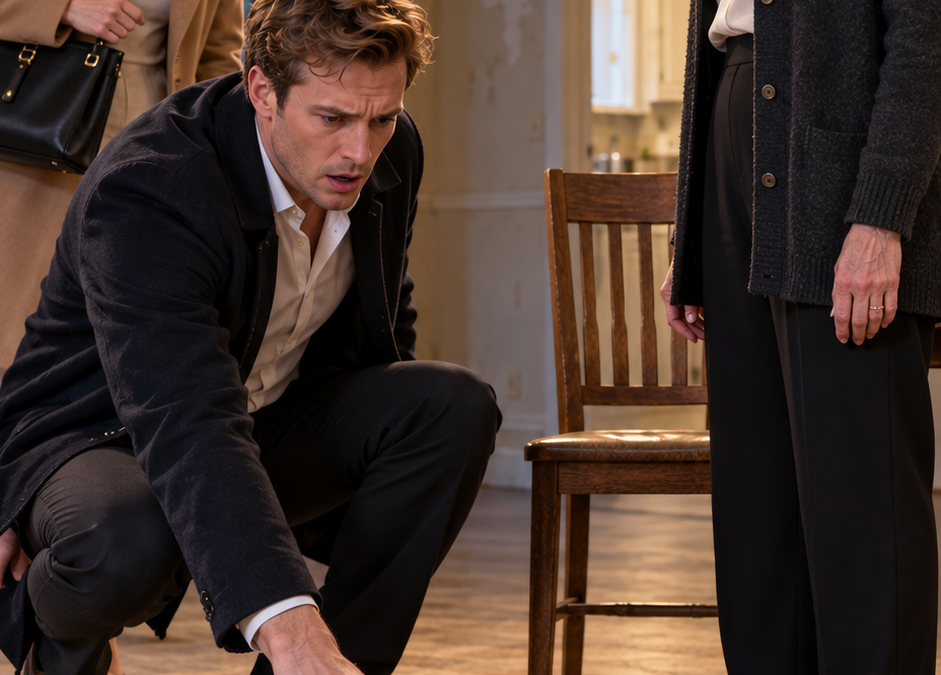
Julian stood alone in the empty living room for almost a minute.
The front door remained open.
Cold evening air moved through the bare space.
Outside, the movers secured the wooden chair inside their truck.
Alana stood near her car.
His mother spoke quietly with one of the movers.
She did not look back.
Julian looked down.
The envelope lay open on the floor.
Several pages had slid partly free.
He crouched.
This time his hand did not stop.
He picked them up.
The first pages he had already read.
Revocation of financial authority.
Demand for complete accounting.
Notification prohibiting further contact with pension administrators without written consent.
Then came the final document.
Julian stared.
It was not a will.
Not exactly.
It was a trust declaration.
He read the first paragraph.
Then the second.
His breathing slowed.
All proceeds from the house sale had been placed into a revocable living trust controlled solely by his mother during her lifetime.
The pension would deposit into an account accessible only to her.
No family member had authority.
No co-signer.
No beneficiary could request early distributions.
Julian swallowed.
Then he reached the section labeled REMAINDER BENEFICIARY.
He expected a charity.
Maybe Aunt Miriam.
Maybe no one.
Instead he saw his own name.
JULIAN HARPER.
He stared.
His mother had not removed him.
Not entirely.
He read further.
After her death, whatever remained would pass to Julian.
But only after all debts she had independently incurred were satisfied.
Only after professional accounting.
Only after documented elder-care expenses.
And only through a trustee Julian could not control.
He read the next paragraph.
Then stopped.
There was one condition.
Not a financial condition.
A letter was attached.
Julian sat down on the bare floor.
Outside, Alana noticed.
She hesitated.
Then walked back toward the doorway.
She did not enter.
“What is it?”
Julian did not answer.
He unfolded the letter.
The handwriting was his mother’s.
Julian,
If you are reading this before I die, then things went worse than I hoped.
If you are reading it afterward, I hope they went better.
I did not remove you because I stopped loving you.
I protected this money because I realized I had spent your whole life confusing love with rescue.
Your father left when you were four.
You cried for him for almost a year.
I promised myself you would never feel abandoned again.
I thought that meant I should always say yes.
When you were frightened, I fixed things.
When you made mistakes, I softened them.
When consequences came, I stood between you and them.
I told myself I was making up for your father.
I was not.
I was teaching you that someone who loved you would always absorb the cost.
Julian stopped reading.
Alana remained at the doorway.
His mother was now standing beside the moving truck.
She still had not looked back.
Julian continued.
You learned the lesson I taught you.
That is partly mine to carry.
But what you did with that lesson belongs to you.
You lied to me about my memory.
You used my information.
You tried to take authority I did not give.
Those were choices.
You do not get to put them inside my guilt.
Julian’s jaw tightened.
He wanted to be angry.
He looked for something cruel in the words.
There was none.
That made them harder to reject.
The letter continued.
I am not leaving you nothing.
I am leaving you something I should have given you years ago.
A life in which I am no longer available to prevent every consequence.
If you want a relationship with me, it cannot be based on what I pay, sign, forgive, lend, transfer, or eventually leave behind.
You can visit me.
You can call me.
You can sit at my table.
But you cannot manage my money.
You cannot use my name.
You cannot tell me what I remember.
And you cannot make my age the argument that ends every disagreement.
If you become angry because I have boundaries, be angry.
I survived your father leaving.
I will survive your anger too.
Julian lowered the letter.
His eyes burned.
Alana stepped inside.
Slowly.
“What does it say?”
He laughed bitterly.
“She still left me the money.”
Alana frowned.
“What?”
“Whatever is left.”
He held up the trust.
“She didn’t cut me out.”
Alana looked at him.
Julian’s voice broke.
“I almost wish she had.”
That was the first honest thing he had said all evening.
Alana moved no closer.
Julian stared at the page.
“If she’d cut me out, I could say she was punishing me.”
Alana said nothing.
“But she didn’t.”
He looked toward the open door.
“She protected herself.”
His voice dropped.
“And she still left me something.”
Alana leaned against the wall.
For the first time, neither of them seemed certain who the villain in the room was supposed to be.
Julian looked toward her.
“Are you leaving me?”
Alana inhaled.
“I don’t know.”
He shut his eyes.
There was the answer he had spent his life avoiding.
Not yes.
Not no.
Uncertainty.
A consequence he could not control by changing the story.
Alana continued.
“I know I’m not going home and pretending tonight didn’t happen.”
Julian nodded.
“I know I don’t trust what you tell me about money.”
Another nod.
“And I know I was cruel to her because I believed your version of everything.”
Julian looked down.
Alana tightened the strap of her handbag.
“I need to figure out what part of that was you and what part was me.”
Julian stared at the bare carpet.
“Where are you going?”
“My sister’s.”
He almost protested.
Then stopped.
Alana noticed.
Something in her face softened.
Not forgiveness.
Recognition.
“You should call your mother.”
Julian shook his head.
“She doesn’t want to hear from me.”
“You don’t know that.”
“She just moved without telling me.”
Alana looked toward the letter.
“She literally wrote that you can call her.”
Julian stared.
Of course she had.
Even now, he was converting a boundary into abandonment.
His mother had predicted it on paper.
Alana walked outside.
Julian remained seated.
A few seconds later, his mother appeared in the doorway.
She had come back for the envelope.
Then she saw him holding the letter.
She stopped.
Julian looked up.
For a long moment, neither spoke.
His mother did not ask whether he had read it.
She could tell.
He looked toward the trust papers.
“You still left me as beneficiary.”
“Yes.”
“Why?”
She considered the question.
“Because changing my will in anger would have made this about punishment.”
Julian’s throat tightened.
“It isn’t?”
“No.”
She walked into the empty room.
“This is about making sure I am alive inside my own life.”
Julian looked away.
His mother stood several feet from him.
“You frightened me.”
He closed his eyes.
“I know.”
“No.”
Her voice remained gentle.
“You know now.”
He looked up.
She was not crying.
Neither was he.
Not yet.
“I started checking myself.”
Julian frowned.
“After you told me I was forgetting.”
She touched her temple.
“I would walk into a room and wonder if I had missed something.”
His face tightened.
“I wrote things down because I stopped trusting my memory.”
Julian looked sick.
“I didn’t mean—”
She held up one hand.
“Intent does not erase effect.”
He lowered his eyes.
She continued.
“That does not mean I think you are evil.”
He laughed once.
“I think everyone else does.”
“I do not care what everyone else thinks tonight.”
She looked at him.
“I care whether you understand what you did.”
Julian rubbed his face.
“I wanted the money.”
There it was.
Plain.
His mother remained still.
“I wanted the pension.”
His voice shook.
“I thought if it went into our account, I’d be able to manage the down payment.”
He looked toward the floor.
“And I thought the house would eventually be mine anyway.”
His mother nodded.
Julian continued.
“So I started thinking using it early wasn’t really stealing.”
The word sat between them.
He had finally chosen it himself.
His mother did not soften it.
Julian breathed in.
“And when you resisted, I thought if I made you doubt yourself, you’d stop resisting.”
His mother’s eyes closed.
A tear slipped down her cheek.
The first one all evening.
Julian saw it.
His face collapsed.
“Mom.”
She wiped it away.
“No.”
He stopped.
“I need to hear this without comforting you.”
Julian stared.
Then nodded.
“I am sorry.”
Her eyes remained on him.
He continued.
“Not because the house is gone.”
A pause.
“Not because the pension is protected.”
His voice cracked.
“I am sorry I made you afraid of your own mind.”
His mother’s lips trembled.
Julian swallowed.
“And I’m sorry I used Dad leaving as an excuse long after I was old enough to know better.”
She looked down.
That one reached her.
Julian continued.
“You spent my whole life trying to make sure I never felt abandoned.”
He glanced at the letter.
“And I turned that into permission to take from you.”
Silence.
His mother sat on the floor opposite him.
Her knees protested.
Julian instinctively reached toward her.
She shook her head.
He stopped.
She lowered herself the rest of the way.
Now mother and son sat facing each other on the carpet where the sofa had once stood.
No furniture.
No dinner.
No money between them.
Only the truth.
“I am not forgiving you tonight,” she said.
Julian nodded.
“I know.”
“I don’t know how long this will take.”
“I know.”
“If you call me tomorrow asking where I live, I won’t tell you.”
His face tightened.
But he nodded.
“When will you?”
“When I believe you can hear an address without hearing access.”
Julian absorbed that.
Then nodded again.
His mother looked at him.
“You need help.”
He gave a small, exhausted laugh.
“I figured you’d say that.”
“No.”
She shook her head.
“Not financial help.”
He looked at her.
“You need someone you cannot charm, frighten, guilt, or inherit from.”
Despite everything, Julian laughed.
His mother almost smiled.
It was small.
Fragile.
Real.
She stood first.
Julian remained seated.
At the doorway, she stopped.
“I meant what I wrote.”
He looked up.
“You can call.”
His eyes filled.
“But if you ask me for money—”
“I won’t.”
She waited.
Julian caught himself.
“No.”
He corrected.
“If I do, you can say no.”
His mother looked at him for a long time.
“That is better.”
Then she left.
The house officially changed owners the next morning.
Julian was not there.
His mother moved into a small two-bedroom cottage forty minutes away near her sister.
It had a narrow porch.
A little patch of garden.
And a kitchen barely half the size of the old one.
She loved it.
For the first three weeks, Julian did not know the address.
He called twice.
The first call lasted four minutes.
Neither mentioned money.
The second lasted eleven.
He told her he had started seeing a therapist.
His mother did not praise him excessively.
She had learned something too.
Progress did not need to become another thing she managed for him.
Alana stayed with her sister for almost two months.
She eventually returned to Julian, but only after they separated their finances completely and Julian disclosed every account, debt and application he had hidden.
Their marriage did not become magically happy.
It became honest enough to discover whether it could survive.
That was harder.
And better.
Julian repaid the legal fees his mother incurred because of the pension authorization.
Not all at once.
Monthly.
The first check arrived with no note.
His mother deposited it.
She did not call to thank him.
Repayment was not a gift.
Six months passed before she invited Julian to the cottage.
He arrived alone.
No Alana.
No documents.
No questions about the pension.
He stood on the little porch holding nothing.
His mother opened the door.
For half a second, both of them remembered the empty house.
Then she stepped aside.
Julian entered.
The living room was small.
Warm.
Her old lamp stood beside a secondhand sofa.
Family photographs occupied one shelf.
Not all of them.
Enough.
The wooden chair from the empty room sat beside the window.
Julian noticed it.
“You kept that.”
His mother smiled.
“It fits here.”
He looked around.
“This is nice.”
“Yes.”
No apology for its size.
No explanation.
She led him into the kitchen.
A pot of soup simmered on the stove.
Julian stopped.
For the first time in months, something in his face looked like the boy she had raised.
“You made dinner?”
His mother looked at him.
“For myself.”
Julian blinked.
Then she reached into the cupboard.
She took out a second bowl.
“And there is enough for you.”
His eyes filled.
That distinction mattered.
Dinner was not waiting because she was obligated.
Dinner was being shared because she chose to share it.
They sat at the little kitchen table.
For nearly an hour, they talked about ordinary things.
Alana’s work.
A leaking faucet.
A neighbor’s ridiculous dog.
Julian’s therapy.
His father came up once.
Julian did not use him as an excuse.
His mother noticed.
After dinner, Julian carried both bowls to the sink.
He washed them without being asked.
His mother stood in the doorway watching.
He looked over.
“What?”
“Nothing.”
He smiled slightly.
Then dried the bowls.
Before leaving, he reached the front door and stopped.
“Mom?”
“Yes?”
“I still don’t know how much is in the pension account.”
She smiled.
“I know.”
He nodded.
Then smiled too.
“I think that’s probably good.”
“Yes.”
He opened the door.
Cold evening air entered.
His mother touched his arm.
Julian looked back.
“I am glad you came.”
His throat tightened.
“Me too.”
She did not say she was proud.
Not yet.
He did not ask whether the house money would still come to him someday.
For once, the future did not need to be converted into an asset.
Julian stepped onto the porch.
His mother remained in the doorway.
The little cottage behind her was entirely hers.
Her pension was hers.
Her decisions were hers.
Even her forgiveness was hers to give at the pace she chose.
Julian walked toward his car.
Then turned.
His mother lifted one hand.
He lifted his.
No promises.
No debts.
No inheritance discussed.
Just a mother standing in the doorway of a home her son had no key to—and a son finally learning that being loved had never meant being allowed inside everything.
You Might Also Enjoy
SHE TOLD HIS MOTHER THE MANSION WASN’T HERS—THEN SECURITY BROUGHT OUT THE TABLET CHAPTER 2 — THE $1.85 MILLION TRANSFER