MY SON MOVED INTO MY HOUSE WITHOUT ASKING—SO I OPENED THE ACCOUNT HE FORGOT ABOUT CHAPTER 3 — THE HOUSE THAT WAS NEVER HIS TO SPEND
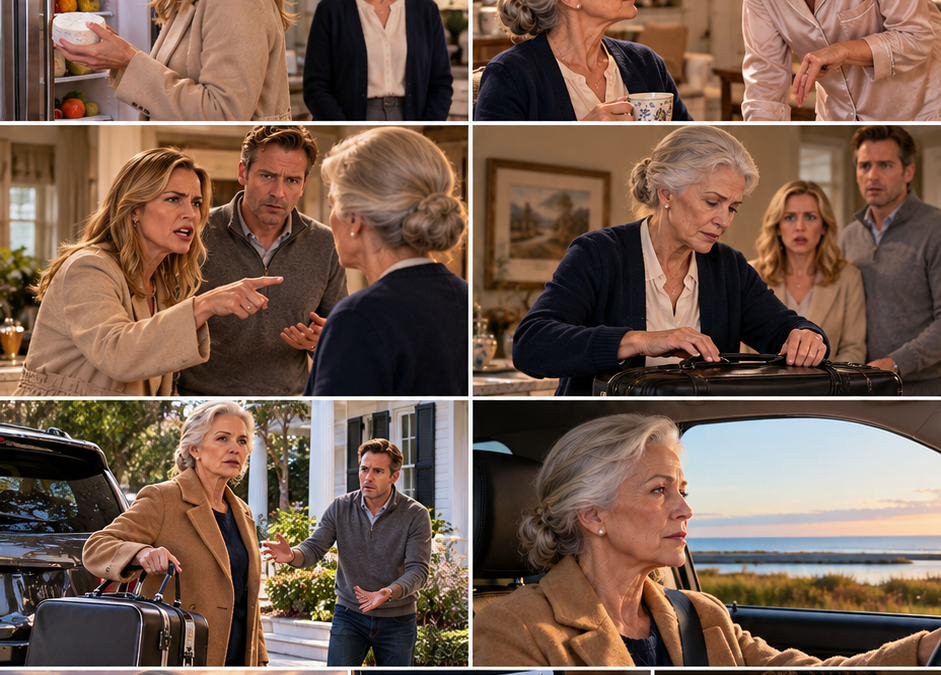
I returned to Charleston Friday afternoon.
Two days earlier than Julian expected.
My suitcase remained in the trunk.
In my handbag were three documents from my attorney.
I had slept badly Thursday night.
Not because I regretted leaving.
Because once Brooke told me Julian planned to convince me to add their names to the deed, memories began rearranging themselves.
Questions Julian had asked over the previous year.
Was the house still paid off?
How much were property taxes?
Did I really need three bathrooms?
Was I still planning to leave the house to him?
Had Thomas and I ever discussed putting property in a trust?
At the time, each question seemed harmless.
Together, they formed a pattern.
I parked beneath the live oak.
Julian’s SUV was in my driveway.
Brooke’s rental car sat behind it.
At least the gas card lesson had produced transportation.
I walked toward the porch.
Before I reached the door, Lily opened it.
“Grandma!”
That alone softened me.
She ran outside.
I hugged her.
“How are you?”
“Dad and Mom are fighting.”
Children never wasted time on euphemisms.
“I’m sorry.”
She looked toward my car.
“Did you bring anything?”
“Yes.”
Her eyes brightened.
“What?”
“Me.”
Lily rolled her eyes.
“Grandma.”
I laughed.
“I have cookies in the trunk.”
Better.
Mason appeared behind her.
“Chocolate?”
“Yes.”
He disappeared immediately to announce the development.
I stepped into my house.
It smelled different.
Takeout.
Coffee.
Something fried.
But the boxes had been moved away from the foyer.
Shoes were lined neatly.
The kitchen counters were clean.
Interesting.
Brooke stood near the dining table.
She wore jeans and a sweater.
No designer trench.
No expression suggesting she was evaluating my property.
“Welcome home.”
I looked around.
“Thank you.”
The words felt strange because it was my home.
Brooke knew it too.
Her face reddened.
“Right.”
Julian appeared from the hallway.
The moment he saw me, his shoulders tightened.
“You said Sunday.”
“I said you had until Sunday.”
“That isn’t the same thing.”
“No.”
I put my handbag on the kitchen chair.
“It isn’t.”
He looked toward Brooke.
Something had happened between them.
That was obvious.
I took off my cardigan.
“Where are the children sleeping?”
“Guest room.”
“And you?”
“Living room.”
Brooke answered.
Progress.
The second guest room had become my reading room after Thomas died.
No one had entered it.
I noticed that too.
Julian crossed his arms.
“What paperwork did you sign?”
Brooke stared at him.
I smiled faintly.
“Good afternoon to you too.”
“Mom.”
“You told him?”
I asked Brooke.
She shook her head.
“No.”
Julian looked between us.
“You two have been talking?”
Brooke laughed bitterly.
“That is what bothers you?”
He rubbed his forehead.
“I am trying to understand what is happening.”
I pulled out a dining chair.
“Sit.”
He stared.
“I’m not twelve.”
“No.”
I looked directly at him.
“At twelve, you asked before bringing friends home.”
Brooke almost smiled.
Julian did not.
He sat.
Brooke sat opposite.
I remained standing.
“Before we discuss the house, I want the truth about one thing.”
Julian’s face hardened.
“What?”
“Did you ever contact anyone about using this property in connection with your house purchase?”
Brooke turned toward him.
He did not answer.
My heart sank.
I had hoped the answer was no.
“Julian.”
He looked toward the window.
“I asked questions.”
I sat.
“What questions?”
“Financing questions.”
Brooke stared.
“You told me you didn’t.”
“I didn’t apply for anything.”
“That was not her question.”
I looked at Brooke.
Something between us had shifted.
Not friendship.
Reality.
I turned back to Julian.
“Who did you contact?”
“A mortgage broker.”
“When?”
“Last month.”
Brooke whispered:
“Before our closing fell apart.”
“Yes.”
“What did you tell him about my house?”
Julian rubbed his hands together.
“That you owned it outright.”
My voice remained steady.
“And?”
“That it would likely come to me eventually.”
Brooke closed her eyes.
“And?”
He looked at me.
I waited.
“He said if we lived here and you added me to the deed later, there were options.”
My stomach tightened.
“What options?”
“Home-equity lending.”
Brooke stood.
“You were actually planning this?”
Julian looked toward her.
“No.”
“You had a broker!”
“I was gathering information.”
“You told me your mother wanted us here long-term.”
Julian snapped.
“Because I knew she would help!”
The room went silent.
Lily appeared at the hallway edge.
I immediately looked toward her.
“Sweetheart, take Mason upstairs for ten minutes.”
She hesitated.
“Everything okay?”
“Yes.”
It wasn’t.
But the adults would handle it.
She nodded and disappeared.
I turned back.
Julian lowered his voice.
“I knew you wouldn’t let us lose everything.”
There it was again.
Not hope.
Expectation.
I leaned back.
“What exactly are you losing?”
He stared.
I continued.
“The Florida house purchase?”
“No.”
“The crypto money?”
“Yes.”
“The down payment?”
Silence.
“Your old home?”
Already gone.
“Your apartment?”
Gone.
“Your gas card?”
He looked annoyed.
I almost laughed.
“Julian, you keep describing consequences as things being taken from you.”
His expression tightened.
“But most of them are simply things you already spent.”
Brooke sat again.
She looked exhausted.
I opened my handbag.
Julian watched.
I removed the first document.
A revocable living trust.
His face changed.
“What is that?”
“The house.”
Silence.
I laid it flat.
“As of yesterday, this property is held in my trust.”
Julian stared.
“I remain trustee.”
“I remain the sole person with authority while I am alive and competent.”
“No one may use the property as collateral without my written authorization.”
“No one may add themselves to the deed.”
“No one may represent an expected inheritance as current ownership.”
Julian’s face went pale.
“You changed the deed?”
“I protected it.”
“From me.”
I looked at him.
“Yes.”
The honesty hurt.
Good.
Some truths should.
Brooke looked toward the document.
“What happens after you die?”
Julian shot her a look.
She stared back.
“I am asking because apparently that question has controlled half our decisions.”
Fair.
I removed the second document.
“My estate plan.”
Julian’s jaw tightened.
“You changed that too.”
“Yes.”
He looked wounded.
For one second, he was seven years old again.
The little boy who once thought being loved meant nothing good could ever be taken away.
I softened.
“Julian.”
His eyes lifted.
“You are still included.”
He blinked.
“Why?”
The question surprised me.
“Because you are my son.”
His face crumpled slightly.
I continued.
“But the house does not pass directly to you.”
He looked down.
“A portion of my estate will be held in trust for Lily and Mason.”
Brooke’s eyes filled.
“Another portion will support my care if I need it.”
“Anything remaining will be distributed under terms you cannot borrow against before my death.”
Julian swallowed.
“So I can’t use it.”
I stared.
“That is the first thing you heard?”
His face reddened.
He looked away.
Brooke closed her eyes.
Julian whispered:
“I didn’t mean it like that.”
“Yes.”
I folded my hands.
“You did.”
Silence.
“And that is precisely why I changed it.”
He stared at the table.
My anger began to fade.
What remained was sadness.
Not because Julian wanted money.
Because he had started seeing every form of security around him as something available if his own ran out.
My account.
My house.
My time.
My labor.
His wife’s home equity.
Even his children’s grandmother.
Nothing was simply mine.
Everything had become potential rescue.
I reached into my bag again.
The third document.
Julian looked almost afraid.
“What now?”
I placed it down.
“A notice ending the financial support I still provide you.”
He stared.
“Your phone plan changes to your name at the end of the billing cycle.”
“Your auto insurance already has notice.”
“Your streaming accounts are gone.”
“You will transfer the remaining balance on the emergency expenses card within thirty days.”
His face reddened.
“You’re cutting me off.”
“No.”
I shook my head.
“I am finishing something I should have finished years ago.”
“You make it sound like I’m some teenager.”
“I paid your phone bill yesterday.”
He stopped.
Brooke stared at him.
“You told me you paid that.”
Julian looked away.
I almost laughed.
Another one.
Small.
Embarrassing.
But revealing.
Brooke whispered:
“What else does your mother still pay?”
Julian said nothing.
I answered.
“Insurance.”
“Part of the family phone plan.”
“The gas card.”
“A streaming bundle.”
“Two annual memberships.”
“And until last year, a portion of his student-loan payment.”
Brooke stared at him.
“You make six figures.”
“So do you,” Julian snapped.
“That isn’t the point.”
“No.”
I looked at him.
“It isn’t.”
I had helped because each expense seemed small.
Forty dollars.
Eighty.
A hundred twenty.
Nothing large enough to start a fight over.
But together they formed a message I had never intended to send:
Your adulthood remains partly my responsibility.
Thomas might have seen it sooner.
He was better at boundaries.
I had mistaken generosity for harmlessness.
I looked at Julian.
“I taught you something I did not mean to teach.”
His eyes lifted.
“That when life becomes difficult, your mother absorbs part of the cost.”
He swallowed.
“That is on me.”
For the first time, he looked genuinely surprised.
I continued.
“But lying to Brooke is on you.”
His eyes lowered.
“Arriving here without asking is on you.”
“Yes.”
“Planning around my house is on you.”
“Yes.”
“And telling your wife I had already agreed to six months here?”
His face tightened.
“Yes.”
Brooke stood abruptly.
“I need air.”
She walked toward the porch.
Julian watched her.
I did not stop her.
After the door closed, he looked at me.
“She may leave me.”
I heard the fear.
Real fear.
Not financial.
Finally.
“What do you want me to do about that?”
His expression crumpled.
“Nothing.”
The answer came after several seconds.
“Nothing.”
I nodded.
That might have been the most adult answer he had given me all week.
He covered his face.
“I screwed everything up.”
“Yes.”
“I was trying to fix it.”
“I know.”
“You don’t sound angry.”
“I am.”
I looked toward Thomas’s photograph.
“But your father taught me something.”
Julian followed my gaze.
“What?”
“Panic makes people solve the wrong problem.”
He lowered his hands.
“You thought the problem was losing the new house.”
“It wasn’t.”
“You thought it was debt.”
“It wasn’t.”
“You thought it was needing somewhere to stay.”
He stared.
I continued.
“The problem was that every time reality frightened you, you hid part of it and borrowed against someone else’s trust.”
His eyes filled.
No defense.
Good.
I softened.
“You can recover from losing money.”
A pause.
“Trust takes longer.”
He nodded.
“I know.”
“No.”
I almost smiled.
“You are beginning to.”
The front door opened.
Brooke returned.
Her face was red from crying.
She sat down.
“I called my sister.”
Julian looked at her.
Brooke continued.
“The kids and I can stay there for two weeks.”
His face fell.
“What about me?”
She looked at him.
“I don’t know yet.”
The sentence hurt him.
I saw it.
Brooke looked toward me.
“I am taking the children because they need stability.”
I nodded.
“Good.”
“Julian needs to figure out what he is doing.”
He looked toward her.
“Our marriage?”
“Our money.”
“Our marriage.”
“All of it.”
Julian said nothing.
Then Brooke turned to me.
“And I owe you an apology.”
I waited.
She continued.
“I walked into your house like I had rights here.”
“Yes.”
“I expected you to feed us.”
“Yes.”
“Watch the kids.”
“Yes.”
“Clean up after us.”
“Yes.”
Her face reddened.
“And when you said no, I called you selfish.”
I nodded.
“You did.”
She swallowed.
“I was angry because Julian told me you had invited us.”
I understood.
“But I also liked believing it.”
That was the part that mattered.
Brooke continued.
“Because it meant I didn’t have to ask.”
My expression softened slightly.
“Yes.”
“I am sorry.”
I believed her.
That did not mean everything disappeared.
But truth had finally entered the room without needing to be dragged there.
“You have until Sunday,” I said.
Brooke nodded.
“We’ll be gone tomorrow.”
Julian looked toward her.
“Brooke.”
She did not change her answer.
That night, all four of them remained in my house.
But everything was different.
Brooke cooked dinner.
Julian washed dishes.
Lily asked why everyone was quiet.
I told her adults were solving adult problems.
Mason spilled juice.
Nobody treated it like a crisis.
After the children went to bed, Julian came onto the back porch where I was reading.
“Mom?”
“Yes?”
“Can I sit?”
The question nearly broke me.
Not because it was profound.
Because two days earlier he would have simply sat.
“Yes.”
He lowered himself into the chair beside me.
For a while we listened to insects in the live oaks.
Then he said:
“I don’t know how to start over.”
I closed my book.
“Good.”
He stared.
“That sounded harsh.”
“I don’t mean it harshly.”
I looked at him.
“If you already knew exactly how to start over, you would probably build the same thing again.”
He almost smiled.
“So what do I do?”
I shook my head.
“No.”
“What?”
“You figure it out.”
He laughed weakly.
“Right.”
Then I added:
“But you can call me while you do.”
His eyes filled.
“That doesn’t mean you’ll pay for it.”
“No.”
I smiled.
“It means I’ll answer the phone.”
He nodded.
For the first time, that seemed like enough.
Brooke and the children left Saturday morning.
Julian moved into an extended-stay hotel near his office.
He hated it.
The carpet smelled strange.
The breakfast was terrible.
The room faced a parking structure.
I considered all of that useful.
Within a month, he had moved his phone, insurance and every recurring bill into his own name.
He sold the SUV.
That surprised me.
He bought a used sedan.
Lily called it ugly.
Julian agreed.
He began meeting with a certified financial counselor and disclosed every account to Brooke.
The debt was worse than she expected.
Better than ruin.
Their marriage survived.
Not quickly.
Brooke stayed with her sister for almost three months.
They attended counseling.
Julian stopped saying he had invested eighty-five thousand dollars.
He learned to say:
“I lost seventy-six thousand dollars.”
Words mattered.
One described strategy.
The other described reality.
The children’s trust remained untouched.
I never told Lily or Mason the full story.
They did not need to know.
What they needed was security.
So I gave them that without turning it into leverage against their parents.
Six months later, Julian came to my house for dinner.
He knocked.
I opened the door.
He stood on the porch carrying a grocery bag.
“No luggage?”
I asked.
He laughed.
“No luggage.”
“What’s in the bag?”
“Steak.”
“Expensive.”
“I paid cash.”
I smiled.
“Show-off.”
He followed me inside.
Brooke and the children arrived later.
She brought dessert.
No one asked for the Wi-Fi password because the children remembered it.
No one opened my refrigerator without asking.
No one assumed I would babysit afterward.
Then, during dinner, Lily mentioned a sleepover invitation for the following weekend.
Brooke looked at me.
“Would you like to have Mason Saturday afternoon while we take Lily?”
She paused.
“If you’re busy, no problem.”
I almost smiled.
A year earlier, she would have announced the arrangement.
Now she asked.
I looked toward Mason.
He was constructing a potato mountain with his fork.
“I would like that.”
Brooke smiled.
“Thank you.”
Simple.
Clean.
Chosen.
After dinner, Julian helped clear the table.
Then he stopped beside Thomas’s photograph.
“Dad would have been furious with me.”
I looked toward him.
“Probably.”
He laughed.
“Thanks.”
“What?”
“I expected you to lie.”
“Your father had an impressive vocabulary when disappointed.”
Julian smiled.
Then he looked toward me.
“Would he have forgiven me?”
I studied my son.
“I think your father understood something you are finally learning.”
“What?”
“Forgiveness and rescue are different things.”
Julian stared.
I continued.
“He could forgive you and still let you pay your own bill.”
Julian nodded.
“I wish I learned that sooner.”
“So do I.”
No cruelty.
Just truth.
Two years passed.
My house remained mine.
The trust remained in place.
I never added Julian to the deed.
He never asked.
That mattered more than I expected.
One spring morning, he called.
Not because he needed money.
Not because his car failed.
Not because a bill arrived.
“Mom.”
“Yes?”
“We got approved.”
“For what?”
“A house.”
I sat straighter.
He laughed.
“Nothing crazy.”
“How much down?”
“Twenty percent.”
“With whose money?”
“Ours.”
I smiled.
“Interest rate?”
He groaned.
“Please don’t ruin this.”
I laughed.
Brooke came onto the call.
“We can afford it.”
“That was my next question.”
“I know.”
Then Julian said something I did not expect.
“It has three bedrooms.”
“Lovely.”
“One is for guests.”
I waited.
He continued.
“But it is not yours.”
I laughed so hard my tea nearly spilled.
“Good.”
“You can visit.”
“I might.”
“You cannot move in without asking.”
“Now you’re learning.”
A month later, I drove to see their new house.
Smaller than the one they had tried to buy before everything collapsed.
No grand staircase.
No designer kitchen.
A modest backyard.
Lily had already taped drawings to her bedroom wall.
Mason had a bicycle leaning against the garage.
Brooke stood in the kitchen.
She handed me tea.
Then gestured toward a chair.
“Sit wherever you want.”
I raised an eyebrow.
“Dangerous offer.”
She laughed.
Julian came in carrying a small cardboard box.
For one second, old instincts returned.
“What now?”
He smiled.
“Relax.”
He placed it on the table.
Inside was a stack of old paperwork.
Phone bills.
Insurance statements.
Copies of transfers I had made over the years.
And on top, one handwritten page.
I picked it up.
Mom,
I spent a long time thinking everything you did for me meant there would always be more.
More money.
More time.
More space.
More chances.
I was wrong.
What you gave me was never proof that I was entitled to the next thing.
It was proof that I had already been loved.
I should have understood the difference sooner.
Julian.
I stopped reading.
My eyes filled.
He looked embarrassed.
“I know it is dramatic.”
“No.”
I folded the page.
“It is accurate.”
He smiled.
I looked around their kitchen.
This time there were no boxes waiting to be moved into my home.
No emergency plan involving my accounts.
No assumption about my spare bedroom.
They had built something smaller.
More fragile.
Entirely theirs.
Later, when I drove back toward Charleston, the road curved beneath the live oaks.
My brick house appeared at the end of the street.
White columns.
Hydrangeas blooming again.
For years, I had worried that protecting my peace might make me selfish.
It did not.
Peace was not emptiness waiting for someone else to fill.
A paid-off home was not family inventory.
Retirement was not unemployment from which children could assign new duties.
And motherhood did not expire when children became adults—but neither did adulthood disappear because their mother still loved them.
I parked.
Walked inside.
Made Earl Grey tea.
Opened an old novel.
Birdsong drifted through the window.
My phone remained silent.
For nearly an hour, nobody needed anything from me.
And when Julian eventually called, I smiled before answering.
Not because I feared another emergency.
Because now, when my son called his mother, sometimes he simply wanted to talk.
You Might Also Enjoy
SHE TOLD HIS MOTHER THE MANSION WASN’T HERS—THEN SECURITY BROUGHT OUT THE TABLET CHAPTER 2 — THE $1.85 MILLION TRANSFER