HER SON LOCKED HER OUT OF THE CABIN—THEN THE COUNTY OFFICER ASKED ONE QUESTION CHAPTER 3 – THE TWENTY-THREE ACRES SHE CHOSE FOR HERSELF
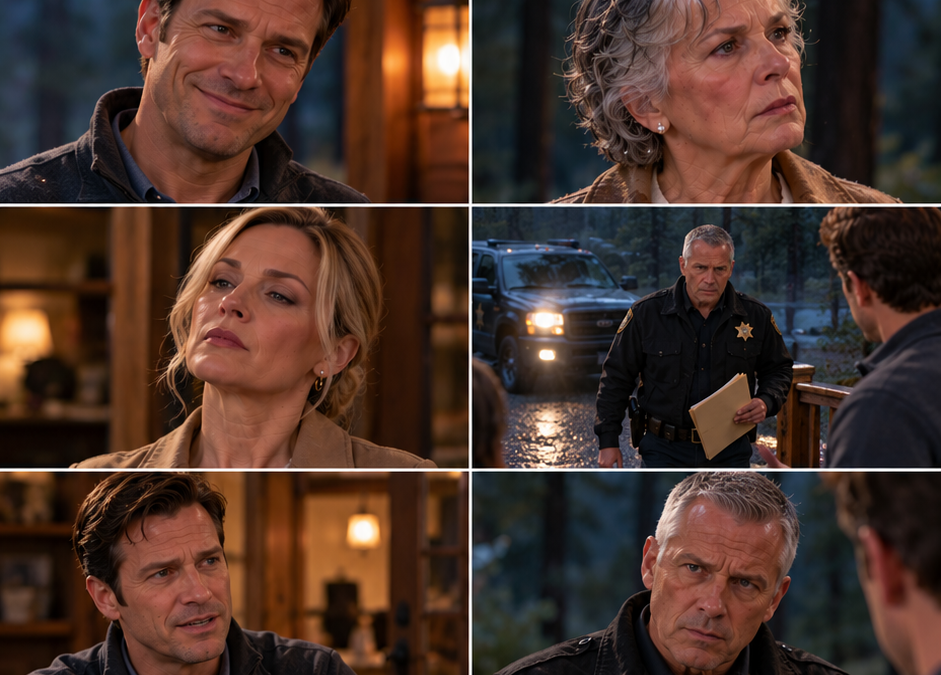
By nine the next morning, the cabin was empty.
Almost.
Margaret stood in the kitchen with a cup of coffee while Daniel carried the final cardboard box toward the door.
He had not slept.
Neither had she.
Madison had left before sunrise.
Most relatives departed shortly after midnight, embarrassed and quiet.
The paying guests were offered hotel rooms in Boone.
Daniel had eventually refunded them.
Margaret did not ask how.
That was his problem now.
She had spent the night walking through each room.
Inventorying what remained.
Not because she feared theft.
Because she needed to understand how thoroughly her home had been converted into something else.
Robert’s fishing rods had been moved from the mudroom.
Her quilts were in storage.
Her kitchen cabinets had been reorganized.
A laminated welcome binder sat beside the refrigerator.
CHECKOUT.
WIFI.
TRASH.
LOCAL ATTRACTIONS.
Margaret stared at it for a long time.
Then placed it facedown.
Daniel came back inside.
“That’s the last box.”
Margaret nodded.
He stood near the kitchen island.
“Mom.”
She waited.
“I want to explain.”
“You’ve been explaining since yesterday.”
“I know.”
He looked exhausted.
“But I haven’t explained why.”
Margaret took a sip of coffee.
“I’m listening.”
Daniel rubbed his neck.
That old habit.
Robert’s habit.
It hurt every time.
“After Dad died, you changed.”
Margaret said nothing.
“You stopped coming to Raleigh as much.”
“I was grieving.”
“I know.”
“You stopped asking me for help.”
Margaret almost smiled.
“I didn’t need much.”
“Exactly.”
Daniel looked frustrated by his own words.
“I thought you would.”
Margaret frowned.
He continued.
“Dad always handled things.”
“Some things.”
“Most things.”
Margaret let that insult pass.
Daniel looked toward the window.
“When he died, I thought you’d need me.”
Margaret felt something inside her soften despite herself.
“I did.”
He looked at her.
“Then why didn’t you act like it?”
Margaret put down her coffee.
“Because needing my son and needing a manager are different things.”
Daniel’s face tightened.
“I didn’t know how to be useful.”
The sentence surprised her.
For months she had seen greed.
Entitlement.
Control.
Now another layer appeared.
Not an excuse.
But a beginning.
Daniel continued.
“I came here and fixed gutters.”
Margaret remembered.
“I handled the tree service.”
“Yes.”
“I called contractors.”
“Yes.”
“And every time you thanked me, I felt like…”
He stopped.
“Like what?”
“Like Dad.”
Margaret closed her eyes.
There it was.
Daniel had not merely wanted the cabin.
He had wanted Robert’s role.
The man who handled things.
The man who protected.
The man whose opinion mattered.
Somewhere along the way, helping had become authority.
Authority had become entitlement.
Entitlement had become ownership in his mind long before any deed changed.
Margaret looked at him.
“You are not your father.”
Daniel flinched.
She continued gently.
“That isn’t an insult.”
He looked at her.
“Your father loved this place.”
“So do I.”
“I know.”
“But he never believed loving something made it his alone.”
Daniel stared.
Margaret glanced at the walls.
“Robert and I fought over this cabin more than you know.”
Daniel looked surprised.
“About what?”
“Money.”
She smiled faintly.
“Always money.”
“He wanted to add the upstairs bathroom ten years before we could afford it.”
Daniel laughed despite himself.
“That sounds like Dad.”
“He was terrible with timelines.”
Daniel’s smile faded.
Margaret continued.
“But he never signed my name.”
Daniel looked down.
“Never changed my locks.”
His eyes filled.
“Never moved my things and called it management.”
Daniel nodded.
“I know.”
Margaret studied him.
“Do you?”
“Yes.”
He looked at her.
“I didn’t yesterday.”
That answer felt more honest than an apology.
Margaret walked toward the dining table.
The county officer had left several copies there.
Termination paperwork.
Contact information.
A summary of next steps.
Margaret had called an attorney first thing that morning.
The property management authorization would be revoked immediately.
The rental platform listings had already been deactivated.
Then the attorney asked a question Margaret had not expected.
“Would you like us to review the financial activity associated with the property?”
Margaret said yes.
Now she looked at Daniel.
“How much rental income did you collect?”
He exhaled.
“About thirty-eight thousand.”
Margaret stared.
More than she expected.
“How much is left?”
“Eight.”
Her expression hardened.
“Eight thousand?”
He nodded.
“What happened to thirty?”
“Expenses.”
“Some.”
Daniel nodded.
“Some.”
Margaret waited.
He looked ashamed.
“I paid down a credit card.”
Her chest tightened.
“Yours?”
“Yes.”
“How much?”
“Seven.”
Margaret said nothing.
“Then we used some for a vehicle deposit.”
“We.”
“Madison and me.”
Margaret felt the last of her sympathy tighten into something firmer.
“You used rental money from my property for your personal debt and a vehicle.”
Daniel looked down.
“Yes.”
“Did Madison know the money belonged to the cabin?”
“She knew it came from bookings.”
“Did she know I hadn’t approved them?”
Silence.
“Daniel.”
“Yes.”
Margaret nodded.
That hurt.
But at least it was clear.
“Anything else?”
Daniel shook his head.
Then stopped.
Margaret saw it.
“What?”
He closed his eyes.
“We put a deposit on a small lot.”
Margaret stared.
“Where?”
“Near Blowing Rock.”
“For what?”
“A second rental.”
Margaret actually laughed.
Daniel looked miserable.
“You used money from my unauthorized rental to begin another rental business.”
“When you say it like that—”
“How else would you like me to say it?”
He said nothing.
Margaret walked to the window.
Pines moved beyond the glass.
Twenty-three acres.
For months Madison’s question had been framed like an accusation.
Why does a widow need twenty-three acres?
Margaret finally understood the answer.
She didn’t need them.
That was never the point.
Ownership was not a needs test.
Autonomy was not awarded according to efficiency.
She turned back.
“The attorney will review everything.”
Daniel’s face tightened.
“Are you going to sue me?”
Margaret considered the question carefully.
“I don’t know.”
He looked frightened.
“Mom.”
“I said I don’t know.”
She approached him.
“I am not going to make that decision today because I am angry.”
Relief appeared.
Margaret raised one hand.
“But I am not going to promise you there will be no consequences because I love you.”
Relief disappeared.
Daniel nodded slowly.
“Fair.”
Margaret was surprised.
“Yes.”
He looked toward the door.
“Madison thinks you’re trying to destroy us.”
Margaret almost smiled.
“What do you think?”
Daniel stared at the floor.
“I think we did something that felt less wrong each time we repeated it.”
Margaret felt the sentence land.
That was exactly how these things happened.
Not one monstrous choice.
A chain of smaller permissions.
Use the cabin one weekend.
List another date.
Move a few belongings.
Change the locks for “security.”
Collect money.
Spend some.
Spend more.
Then report the owner as the problem standing at the door.
Margaret nodded.
“That sounds right.”
Daniel picked up his coat.
At the door, he stopped.
“Can I ask something?”
“Yes.”
“Are you going to sell?”
Margaret looked around.
Yesterday that question would have enraged her.
Today it felt different.
Maybe because she finally knew the answer did not belong to Daniel.
Or Robert.
Or the land.
Only her.
“I don’t know.”
Daniel nodded.
Then smiled sadly.
“I guess that’s your decision.”
Margaret looked at him.
“Yes.”
He opened the door.
Cold air moved inside.
Before stepping out, Daniel turned.
“I’m sorry about the water.”
Margaret’s expression changed.
Of all the things he had done, that small humiliation remained strangely sharp.
“Why did you do it?”
He closed his eyes.
“You wouldn’t leave.”
Margaret waited.
“And everyone was watching.”
There it was.
Pride.
Daniel continued.
“I wanted to make you feel ridiculous.”
Margaret stared.
He could barely meet her eyes.
“I did.”
The admission hurt more than a justification would have.
Because it was real.
Margaret nodded.
“Thank you for telling me.”
Daniel looked confused.
“You’re thanking me?”
“For the truth.”
She paused.
“It doesn’t make it okay.”
“I know.”
He stepped outside.
Margaret closed the door.
Then locked it.
The sound was small.
For the first time since yesterday, the lock felt like protection instead of exclusion.
Over the next month, the financial review finished.
Daniel repaid what remained immediately.
The vehicle purchased partly with rental funds was sold.
The lot deposit was forfeited and the recovered portion returned.
Daniel signed a repayment agreement for the balance.
Margaret chose not to pursue a larger civil claim after her attorney confirmed she could secure full repayment through the agreement.
Not because she wanted to rescue Daniel.
Because she wanted finality more than punishment.
Madison disagreed.
She stopped speaking to Margaret entirely.
Daniel and Madison’s marriage entered a difficult period.
Margaret stayed out of it.
That was harder than she expected.
She loved her son.
Loving him did not mean supervising his consequences.
Winter came early.
Snow settled over the ridge.
Margaret spent Christmas at the cabin alone by choice.
Daniel called.
They spoke for fifteen minutes.
No property.
No money.
No apology.
Just weather.
A football game.
A recipe Robert used to make badly.
It was the first normal conversation they had shared in months.
In February, Daniel began therapy.
He did not tell Margaret until April.
She did not ask for details.
By summer, he had repaid nearly half the money.
Madison sent Margaret a letter.
Not an apology exactly.
But close.
She wrote that she had spent years believing unused things were wasted things.
Empty bedrooms.
Land.
Money.
Time.
She admitted she had applied the same logic to Margaret.
A widow alone in a large property looked inefficient.
Margaret read that sentence several times.
Then Madison wrote:
I confused your solitude with emptiness.
Margaret cried.
That was the first sentence that reached her.
She responded with three lines.
Thank you for writing.
I am not ready to forget.
I am willing to move forward.
A year after the night on the porch, Margaret finally made a decision about the land.
She kept seventeen acres.
Sold six.
The sold parcel bordered the county road and had never meant much emotionally.
The money paid for repairs to the cabin, a new roof and something else.
A small conservation agreement protecting the creek and lower pine grove from development.
Daniel learned about it after the paperwork was complete.
He smiled.
“Dad would like that.”
Margaret looked at him.
“I like it.”
Daniel caught himself.
“Right.”
She smiled.
“Your father probably would too.”
By autumn, Daniel visited again.
Not with luggage.
Not with plans.
Just lunch.
He parked at the bottom of the drive and walked up carrying groceries.
Margaret opened the door.
For a second, both remembered the last time he had stood on that porch.
The bucket.
Her wet hair.
The county vehicle.
The locked door.
Daniel looked uncomfortable.
Margaret stepped aside.
“Come in.”
He entered.
No entitlement.
No assumption.
Just invitation.
They made soup.
Daniel repaired a loose cabinet hinge after asking first.
That detail almost made Margaret laugh.
At sunset, they carried coffee onto the porch.
The mountains turned blue in the distance.
Daniel leaned against the railing.
“Can I ask you something?”
Margaret smiled.
“You ask permission a lot now.”
“I’ve been told it’s healthy.”
She laughed.
“Go ahead.”
“Why did you keep the cabin?”
Margaret looked toward the pines.
Madison’s old question returned.
Why does a widow need twenty-three acres?
Now seventeen.
Still far more than one woman needed.
Margaret considered explaining Robert.
Memory.
History.
The creek.
The quiet.
Instead she gave Daniel the simplest answer.
“Because I wanted to.”
Daniel looked at her.
Then nodded.
“Good reason.”
“It turns out it is.”
They stood quietly.
Wind moved through the trees.
Daniel’s truck sat down by the gravel drive.
Inside, Robert’s photograph rested upright on the mantel again.
Nothing packed.
No strangers.
No welcome binder.
No one waiting to inherit the evening.
Margaret wrapped both hands around her coffee.
A year earlier, she had stood on this porch soaked, humiliated and locked out while her son tried to convince the county that she no longer belonged.
Now the same door stood open behind her.
Not because Daniel had finally given something back.
Because it had never been his to take.
Margaret looked across the land as dusk settled over the ridge.
She did not need twenty-three acres.
She did not need seventeen.
She needed only one thing.
The right to choose what happened to the life that was still hers.
You Might Also Enjoy
THEY TOLD HER DINNER WAS AT 8:30—THEN THE MANAGER REVEALED THE TRUTH CHAPTER 3 — THE BILL THEY COULD NOT LEAVE WITH HER
SHE TOLD HIS MOTHER THE MANSION WASN’T HERS—THEN SECURITY BROUGHT OUT THE TABLET CHAPTER 2 — THE $1.85 MILLION TRANSFER