THEY TOLD HER DINNER WAS AT 8:30—THEN THE MANAGER REVEALED THE TRUTH CHAPTER 3 — THE BILL THEY COULD NOT LEAVE WITH HER
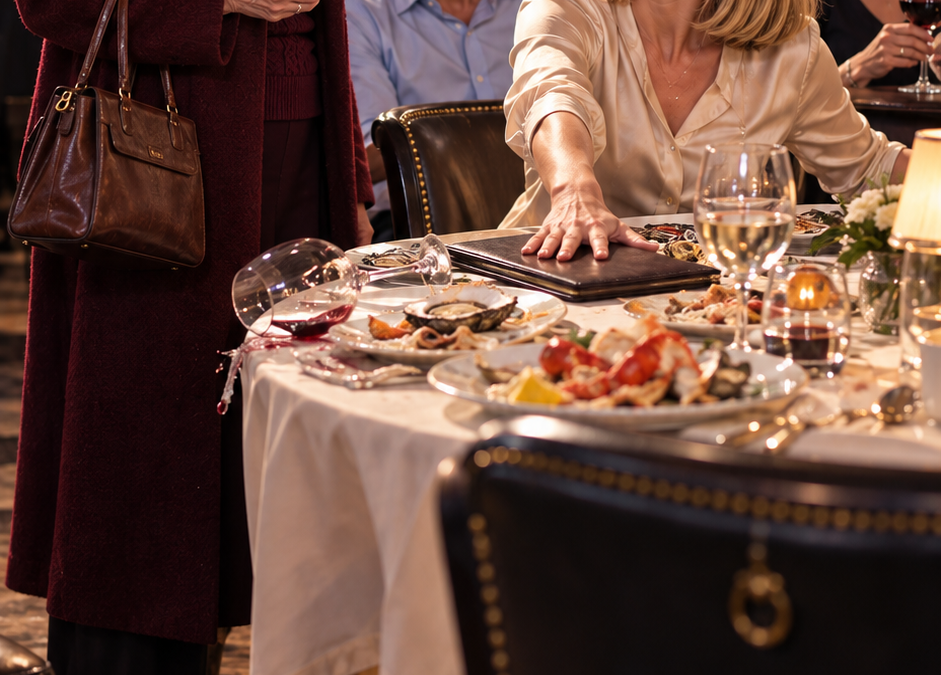
Mrs. Robinson kept the phone in her hand.
Steve looked toward Vanessa.
Vanessa looked nowhere.
That was enough to tell Mrs. Robinson where to begin.
“What transfer?”
Steve asked.
His voice sounded genuinely confused.
Mrs. Robinson studied him.
“You don’t know?”
“No.”
Vanessa shifted.
Steve saw it.
He turned toward his wife.
“Vanessa.”
She folded her arms.
“What?”
Mrs. Robinson’s bank had flagged an outgoing transfer from a secondary cash account linked to the Raymond portfolio.
$42,500.
Three weeks earlier.
Recipient:
Creston Escrow Services.
Mrs. Robinson had never heard the name.
Her bank had initially processed it because the amount fell within delegated transfer limits and the authorization originated through a linked user credential.
Mrs. Robinson stared at Steve.
“Do you have access to the cash account?”
“Yes.”
“Did you transfer forty-two thousand five hundred dollars to Creston Escrow?”
His face drained.
“No.”
Immediate.
Mrs. Robinson believed him.
Then both looked at Vanessa.
She remained still.
Steve’s voice hardened.
“Did you?”
Vanessa shook her head.
“No.”
Mrs. Robinson waited.
Vanessa’s eyes flicked away.
There.
Mrs. Robinson asked:
“What is Creston?”
Nobody answered.
She took out her phone.
Searched nothing.
Called her bank back instead.
Verification first.
A representative confirmed Creston Escrow was connected to the property Steve and Vanessa were purchasing.
Mrs. Robinson ended the call.
“The house.”
Steve looked stunned.
“That was the deposit?”
Vanessa’s jaw tightened.
Mrs. Robinson’s voice dropped.
“Was it?”
Vanessa looked toward Steve.
“You said we needed to move fast.”
Steve stared.
“That wasn’t my money.”
“You told me your mom had given you access for emergencies.”
His face changed.
Mrs. Robinson felt cold.
Steve whispered:
“Emergencies.”
Vanessa continued.
“The seller was going to accept another offer.”
“So you used my mother’s account?”
“I planned to replace it.”
Mrs. Robinson almost laughed.
Again.
Planned.
Replace.
Later.
Temporary.
Every betrayal had vocabulary designed to make it sound smaller.
Steve stood.
“You moved forty-two thousand dollars out of Mom’s account without telling me.”
Vanessa’s expression hardened.
“You knew we needed the deposit.”
“That does not mean—”
“You kept saying we’d figure it out.”
Steve stared.
“That doesn’t mean steal from my mother.”
The word changed the room.
Vanessa went pale.
Mrs. Robinson did not react.
She was not interested in labels yet.
Facts first.
“How did you access it?”
Vanessa looked toward the table.
Mrs. Robinson waited.
Steve’s face changed.
“My login?”
No answer.
“Vanessa.”
“You leave your passwords everywhere.”
He stared.
Mrs. Robinson closed her eyes briefly.
Of course.
Steve had logged into the account from their home computer.
Probably saved credentials.
Convenience.
Always convenience.
Steve’s voice shook.
“You logged into my mother’s account as me.”
Vanessa snapped:
“I did what you were too scared to do.”
Silence.
Mrs. Robinson looked toward her.
There.
Not denial.
Justification.
Vanessa continued.
“You wanted the house.”
“You wanted to stop renting.”
“You wanted to prove you could provide something.”
Steve looked sick.
“That does not give you permission.”
“You would have backed out.”
“Yes!”
The word came louder than anything else that evening.
Steve stopped himself.
Everyone stared.
He lowered his voice.
“Yes.”
“If the only way we could buy it was taking money from my mother without asking, I would have backed out.”
Vanessa’s face cracked.
For the first time, she seemed afraid not of losing the house—
but of losing Steve.
Mrs. Robinson watched silently.
This part belonged to them.
Vanessa looked toward him.
“You said you hated being dependent on her.”
Steve flinched.
Mrs. Robinson felt that.
Truth used as a knife.
Vanessa continued.
“You said every time she helped, she remembered it forever.”
Mrs. Robinson looked at Steve.
He looked ashamed.
“I said that.”
She nodded.
Not forgiveness.
Information.
Vanessa continued.
“You said you wanted one thing in your life that wasn’t connected to your mother.”
Steve’s face hardened.
“So you funded it with her money?”
Silence.
The contradiction was brutal.
Even Vanessa heard it.
She sat.
Daphne finally spoke.
“Vanessa.”
Her daughter looked toward her.
Daphne’s face held disappointment Mrs. Robinson had not expected.
“Give it back.”
Vanessa laughed bitterly.
“With what?”
There.
The problem.
The $42,500 had gone into escrow.
If the purchase collapsed, some might return.
Some might not.
The $30,000 earnest money Steve mentioned earlier had apparently not come entirely from their own savings after all.
Mrs. Robinson looked toward him.
“How much of your money is actually in the deal?”
Steve stared.
“About seventy.”
“And mine?”
“Forty-two five.”
“And the rest?”
Vanessa whispered:
“Credit.”
Mrs. Robinson felt tired.
“How much?”
“About twelve.”
“So even the deposit was partly financed.”
No answer.
Mrs. Robinson leaned back.
The house had become a symbol before it became affordable.
They wanted the announcement.
The photographs.
The address.
The feeling of success.
And because reality did not match the image, they borrowed from the future.
Then from her.
Mrs. Robinson looked at Vanessa.
“Why tonight?”
Vanessa frowned.
“What?”
“Why celebrate tonight instead of after closing?”
No answer.
Mrs. Robinson knew.
Because celebration creates commitment.
Once the family toasted them—
once everyone knew—
backing out would feel humiliating.
Public certainty used to trap private doubt.
Mrs. Robinson looked toward Steve.
“Did you know she moved the $42,500 when you sent me the eight-thirty message?”
He shook his head.
“No.”
She believed him.
“But you knew about the collateral request.”
“Yes.”
“And you delayed me because?”
He stared.
“I wanted it approved before you got here.”
She nodded.
“So your wife took money without your knowledge.”
“And you knowingly tried to pledge more without mine.”
Steve’s face crumpled.
“Yes.”
The symmetry hurt him.
Good.
Not as punishment.
As clarity.
Mrs. Robinson looked around the table.
The bill folder remained closed.
Vanessa followed her gaze.
Then suddenly pushed it toward Mrs. Robinson.
“At least take care of this.”
Daphne stared.
Steve looked horrified.
Mrs. Robinson looked at the folder.
Then Vanessa.
“You still want me to pay for dinner.”
Vanessa’s face flushed.
“You came late.”
Steve closed his eyes.
“Vanessa, stop.”
“No.”
She looked toward him.
“We’re losing the house.”
“We may lose the deposit.”
“And now everyone is acting like your mother is some victim when she can fix this with one phone call.”
Mrs. Robinson stared.
There it was.
The belief beneath everything.
Not simply that Mrs. Robinson had money.
That her ability created obligation.
If she could fix the problem, refusing to do so became cruelty.
Mrs. Robinson understood suddenly why Vanessa had resented her for years.
Mrs. Robinson’s financial security made every boundary look optional.
“Open the folder.”
Vanessa blinked.
“What?”
“The bill.”
She opened it.
Total dinner:
$2,386.40.
Mrs. Robinson looked at Steve.
“Who invited everyone?”
“Vanessa and me.”
“Who ordered?”
“Everyone.”
Mrs. Robinson nodded.
Then called Mark Anthony back.
He arrived quickly.
“Ma’am?”
She pointed toward the bill.
“Separate my charges.”
Vanessa stared.
Mark looked confused.
“You didn’t order anything.”
Mrs. Robinson smiled faintly.
“Then mine should be easy.”
For the first time all evening, Daphne laughed.
Not mockingly.
A short, surprised sound.
Vanessa went rigid.
Mrs. Robinson looked toward Mark.
“Please charge nothing to me.”
“Of course.”
She turned to Steve.
“You wanted a dinner celebrating independence.”
His eyes lowered.
“Pay for it independently.”
He almost smiled despite the tears.
Fair.
Vanessa did not.
Mrs. Robinson stood.
This time Steve rose too.
“Mom.”
She waited.
“What happens now?”
The question was different from earlier.
Not:
Will you save the house?
What happens now?
Mrs. Robinson answered.
“Tomorrow, the bank removes your access.”
He nodded.
“Okay.”
“My attorney will review the $42,500 transfer.”
His face tightened.
“Okay.”
“If it can be returned through escrow, it comes back.”
“Yes.”
“If it cannot—”
She looked toward Vanessa.
“Then the appropriate people determine responsibility.”
Vanessa went pale.
Mrs. Robinson continued.
“I am not deciding tonight whether this was fraud, misuse, or something else.”
“I am deciding only that neither of you has access to my accounts again.”
Steve nodded.
Vanessa stared.
“And the house?”
Mrs. Robinson looked at her.
“That is yours to solve.”
Vanessa’s voice cracked.
“We’ll lose it.”
“Maybe.”
“How can you just walk away?”
Mrs. Robinson looked toward her.
“Because it was never my house.”
Silence.
“You wanted it.”
“You chose the price.”
“You chose the deadline.”
“You chose financing that depended on assets you did not own.”
She picked up her handbag.
“That does not become my emergency because the consequences arrived.”
Vanessa looked away.
Daphne stood.
“I’ll drive you home.”
Vanessa stared at her mother.
“Mom?”
Daphne looked toward her daughter.
“You should stay with your husband.”
Vanessa’s face hardened.
Daphne continued.
“And tell him the rest.”
Steve turned.
“The rest?”
Vanessa froze.
Mrs. Robinson stopped.
Daphne looked devastated.
“I didn’t know about Ruth’s account.”
Mrs. Robinson listened.
“But I know why Vanessa wanted the house closed this month.”
Vanessa whispered:
“Mom.”
Daphne shook her head.
“No.”
She looked toward Steve.
“She already told her landlord you’re not renewing.”
Steve frowned.
“We weren’t.”
“Not your apartment.”
Daphne said.
“Her studio.”
Vanessa closed her eyes.
Steve stared.
“What studio?”
Daphne looked toward Vanessa.
Her daughter said nothing.
Daphne answered.
“The interior-design studio you’ve been paying for.”
Steve went still.
Mrs. Robinson remained silent.
Another hidden expense.
Daphne continued.
“Vanessa signed a commercial lease six months ago.”
Steve’s face emptied.
“How much?”
Vanessa finally spoke.
“Steve.”
“How much?”
“Three thousand a month.”
His face went pale.
“You don’t have a design business.”
“I was starting one.”
“With what money?”
Silence.
Daphne answered.
“Some of the money you thought was going into house savings.”
Steve sat.
Mrs. Robinson’s chest hurt for him.
Yet she did not move.
His marriage needed truth more than maternal rescue.
Mrs. Robinson looked toward Daphne.
“Take me home.”
Daphne nodded.
They left together.
Steve remained at the table with Vanessa.
Mrs. Robinson did not look back.
The next morning, she changed every account authorization.
Not in anger.
Administration.
New passwords.
New emergency agent.
Her brother first.
A professional fiduciary second.
Steve remained beneficiary of her estate.
Mrs. Robinson did not disinherit him.
She did something harder.
She stopped making access easy.
Her attorney contacted the escrow company.
The $42,500 had not yet been released to the seller.
After documentation and dispute, the money returned.
Not immediately.
But fully.
The house purchase collapsed.
Steve and Vanessa lost part of their own earnest money.
They remained renters.
For a while.
Their marriage almost ended.
The design studio became the breaking point.
Vanessa had hidden nearly $28,000 in business expenses.
Steve had hidden his plan to pledge his mother’s account.
Neither could claim moral superiority after that.
They entered counseling.
Mrs. Robinson refused to become mediator.
When Steve called to explain a fight, she interrupted.
“Do you want me as your mother or as your judge?”
He went quiet.
“Mother.”
“Then I can listen.”
That changed something.
He stopped asking her to decide who was right.
Vanessa apologized months later.
Not at a restaurant.
At Mrs. Robinson’s kitchen table.
No silk blouse.
No audience.
She looked tired.
“I hated how much Steve relied on you.”
Mrs. Robinson waited.
Vanessa continued.
“And I think I convinced myself that if I could get us into a house without asking you directly, we would finally be separate.”
Mrs. Robinson looked at her.
“You used my money to prove you didn’t need my money.”
Vanessa’s eyes filled.
“Yes.”
The absurdity hurt.
Mrs. Robinson continued.
“And you told me the wrong dinner time.”
Vanessa closed her eyes.
“Yes.”
“Why?”
Her voice cracked.
“Because I knew if you were there before the collateral cleared, you’d stop it.”
Mrs. Robinson nodded.
“Correct.”
Vanessa laughed through tears.
“I know.”
Mrs. Robinson did not forgive her that day.
She accepted the apology.
Different thing.
Steve changed more slowly.
He opened his own emergency fund.
Then his own investment account.
Small at first.
Mrs. Robinson knew because he proudly told her when it reached ten thousand dollars.
She resisted the urge to offer more.
A year later, it reached twenty.
He and Vanessa eventually bought a house.
Not $1.2 million.
$465,000.
Three bedrooms.
Older kitchen.
Small yard.
They saved the down payment themselves.
When Steve called to say their offer had been accepted, Mrs. Robinson asked one question.
“Do you need anything?”
He laughed.
“No.”
Her eyes filled.
“Good.”
At the housewarming, dinner was scheduled for six.
Steve called her at four.
“Mom.”
“Yes?”
“Dinner is definitely six.”
She laughed.
“Are you sure?”
“I have written confirmation.”
“Excellent.”
She arrived at 5:48.
Vanessa opened the door.
For one uncomfortable second, both women remembered the restaurant.
Then Vanessa smiled.
Not polished.
Real.
“You’re early.”
Mrs. Robinson raised an eyebrow.
“Like always.”
Steve called from the kitchen.
“She has documentation!”
They laughed.
The moment did not erase what happened.
Nothing needed to.
At dinner, Steve paid.
Mrs. Robinson noticed.
She said nothing.
Later, while helping carry plates, Vanessa found Mrs. Robinson alone by the sink.
“I think about that bill folder sometimes.”
Mrs. Robinson looked over.
“Why?”
“Because I was so sure making you pay would prove something.”
“What?”
Vanessa shook her head.
“I don’t even know anymore.”
Mrs. Robinson did.
“It would have proved I was still willing to finance being disrespected.”
Vanessa looked at her.
Then nodded.
“Yes.”
Mrs. Robinson dried her hands.
“That was the part that ended.”
Years later, Steve became the person listed as emergency contact again.
Not financial agent.
Mrs. Robinson kept that boundary.
He never asked her to change it.
That was part of why she trusted him more.
The Raymond account remained intact.
Eventually Mrs. Robinson used part of it for something Raymond had always wanted to do but never managed.
A month-long trip through Italy.
Steve drove her to the airport.
At the curb, he lifted her suitcase from the trunk.
“How much are you spending?”
Mrs. Robinson stared.
His face went pale.
“I was joking.”
She laughed.
“I know.”
He relaxed.
Then she smiled.
“A lot.”
“Good.”
And he meant it.
That mattered.
Before she entered the terminal, Steve hugged her.
No financial conversation.
No house.
No emergency.
Just her son.
Mrs. Robinson thought back to the restaurant.
The glass breaking.
Daphne laughing.
Vanessa’s hand on the bill.
Steve staring at his plate.
For a long time, she believed the worst part was being told she was late when everyone else knew she wasn’t.
Years later, she understood it differently.
The lie about 8:30 had been painful because it revealed a larger belief:
They thought her presence could be scheduled around their convenience.
Her money could be available without her consent.
Her no could be avoided if they acted fast enough.
Her love could be counted on even when respect was withheld.
That was what changed at the table.
Not whether Mrs. Robinson loved her son.
She always would.
What changed was the price she was willing to pay to prove it.
After that night, love remained.
The automatic checkbook did not.
And strangely, once the money stopped doing the work, the family finally had to learn how to.
You Might Also Enjoy

SHE TOLD HIS MOTHER THE MANSION WASN’T HERS—THEN SECURITY BROUGHT OUT THE TABLET CHAPTER 2 — THE $1.85 MILLION TRANSFER