MARGARET ELLIS SOLD HER OWN HOUSE—THEN ONE QUESTION EXPOSED WHAT HER DAUGHTER-IN-LAW HAD BEEN HIDING CHAPTER 3 – THE HOME ROBERT LEFT HER
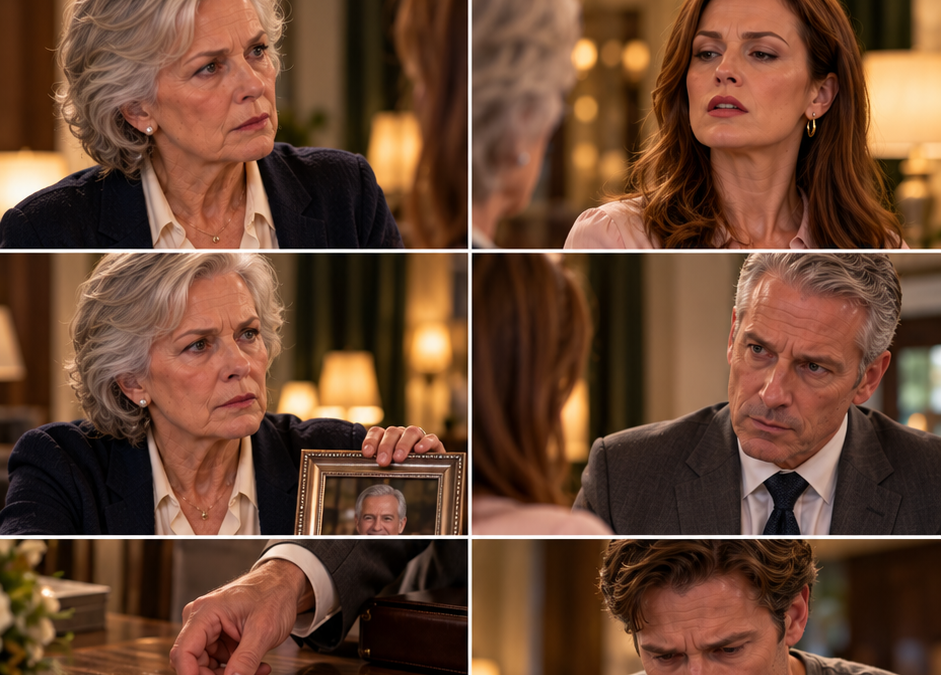
Margaret left before sunrise.
Not because she wanted to avoid anyone.
Because she wanted the first hour of the journey to belong entirely to her.
Her suitcase rested in the trunk.
Robert’s photograph sat carefully wrapped inside a sweater.
Her navy travel jacket was buttoned against the morning chill.
When Margaret backed out of the driveway, the house remained dark except for one upstairs window.
Eric’s old bedroom.
She could not see who stood behind the curtain.
She did not stop.
For almost forty years, leaving that driveway had meant she was going somewhere temporarily.
Work.
Vacation.
Groceries.
The hospital.
A funeral.
A wedding.
This time, Margaret knew she would not return as the owner.
The thought followed her for several miles.
Then something unexpected happened.
It became lighter.
By the time she reached the highway, the sun had started climbing over the trees.
Margaret turned on the radio.
Then turned it off again.
She preferred the quiet.
Maine had been Robert’s idea.
He used to mention it every summer.
“We’ll go next year.”
Then Eric needed braces.
Then Robert’s company entered a difficult year.
Then Eric went to college.
Then Margaret’s mother became ill.
Then life became one long collection of reasonable postponements.
Robert died without seeing Maine.
Margaret had always carried that as a small private failure.
Now she understood something.
Robert had not wanted the place.
He had wanted the going.
The willingness to leave familiar roads.
Margaret arrived two days later.
She rented a small cottage near the water.
Nothing luxurious.
One bedroom.
A kitchen barely large enough for two people.
A narrow porch facing the Atlantic.
The first night, Margaret sat outside beneath a blanket while waves broke against dark rocks below.
No toys.
No boxes.
No one asking where the spare towels were.
No one suggesting what should happen to her furniture.
The silence felt enormous.
She cried.
Not elegantly.
Not one perfect tear.
She cried for Robert.
For Eric.
For Vanessa.
For the house.
For herself.
She cried because she had spent years insisting she was fine.
Then she went inside and slept nine hours.
The next morning, her phone contained three messages.
One from Eric.
One from Thomas.
One from Vanessa.
Margaret opened Eric’s first.
We’re moving out today. Dad-in-law gave us two weeks, but we found a short-term rental. Vanessa and I are going to counseling separately before we decide anything. Kids are okay. I love you.
Margaret read it twice.
Then replied.
I love you too.
Nothing else.
Thomas’s message was shorter.
Trust documents are with counsel. No action needed from you. Enjoy your trip.
Margaret smiled.
Then she stared at Vanessa’s name.
She almost left the message unopened.
Finally, she tapped it.
Margaret, I don’t know how to apologize without making it sound like I’m trying to make you forgive me. So I’m not asking for that. I was wrong. About the house. About the way I treated you. About acting like fear gave me permission. I’m sorry.
Margaret set the phone down.
She did not reply.
Not yet.
Forgiveness was not a vending machine.
People did not insert an apology and receive absolution.
But Vanessa’s message mattered.
Because for once, it contained no defense.
Over the next three weeks, Margaret walked.
She ate lobster rolls she thought Robert would have criticized as overpriced.
She visited small bookstores.
She bought a blue scarf from a woman who knitted behind the counter.
She sat on a harbor bench and watched fishing boats return at dusk.
Nobody there knew her as Eric’s mother.
Nobody knew she was a widow.
Nobody knew about the house.
For the first time in years, Margaret experienced herself without a role.
It was unsettling.
Then freeing.
On the seventeenth day, she received a photograph from Eric.
The children sitting on the floor of a small rental living room.
Boxes behind them.
Eric assembling a bookshelf badly.
Vanessa laughing at something outside the frame.
Margaret stared at the picture.
They looked cramped.
They also looked alive.
Underneath, Eric had written:
Turns out four people can survive with two bedrooms.
Margaret laughed aloud.
A woman at the next café table smiled without knowing why.
Margaret typed:
Your father and I survived with one.
Eric replied:
He probably reminded you constantly.
Margaret smiled.
Yes.
Then another message arrived.
I miss him.
Margaret’s eyes filled.
She wrote:
Me too.
A week later, Margaret returned.
Not to the house.
To an apartment she had rented near the river.
Two bedrooms.
Enough room for grandchildren to sleep over.
Not enough room for anyone to move in permanently.
That had been intentional.
Eric met her there.
He carried two grocery bags.
“No boxes?”
Margaret asked.
He looked offended.
“I brought food.”
“Good.”
“And coffee.”
“Better.”
He set everything on the counter.
The apartment was bright.
White walls.
Large windows.
A balcony overlooking trees and water.
Margaret had bought almost no new furniture yet.
Robert’s photograph stood on the mantel.
Eric noticed it.
He walked over.
“Different table.”
Margaret smiled.
“Same man.”
Eric laughed softly.
Then his expression became serious.
“Can we talk?”
Margaret gestured toward the sofa.
They sat.
Eric leaned forward.
“Vanessa and I aren’t making any decisions about the marriage yet.”
Margaret nodded.
“We’re living together.”
Another nod.
“But separately.”
Margaret said nothing.
“We’re trying to figure out whether there’s something left that isn’t just habit and panic.”
“That’s probably worth finding out.”
Eric looked at her.
“She told me everything about the condo.”
Margaret waited.
“Lauren is still there.”
“Good.”
“She pays rent now.”
Margaret raised an eyebrow.
Eric smiled faintly.
“Vanessa insisted.”
“Also good.”
“The condo stays in Vanessa’s name.”
Margaret felt the smallest tightening in her chest.
Eric noticed.
“I’m okay with it.”
Margaret looked at him.
“Are you?”
“I wasn’t.”
He rubbed his hands together.
“But counseling made me realize something.”
Margaret waited.
“I thought marriage meant there shouldn’t be anything separate.”
He smiled sadly.
“Which is strange, because Dad had his workshop and you had that account he pretended not to know about.”
Margaret laughed.
“He knew?”
“Mom.”
Eric grinned.
“Everyone knew.”
She shook her head.
Robert.
Of course.
Eric’s smile faded.
“Vanessa having property isn’t the betrayal.”
“No.”
“Letting me believe something else was.”
“Yes.”
“I can forgive one.”
Margaret looked at him.
“And the other?”
“I don’t know yet.”
She nodded.
That answer made her proud.
Not because it was strong.
Because it was honest.
Eric looked around the apartment.
“You’re really okay here?”
Margaret leaned back.
“I think so.”
“No regrets?”
Margaret glanced at Robert’s photograph.
“Every good decision has regrets.”
Eric frowned.
“That sounds depressing.”
“It isn’t.”
She smiled.
“It just means something can hurt and still be right.”
He considered that.
Then nodded.
They made dinner.
Eric burned the garlic.
Margaret complained.
He blamed the unfamiliar stove.
For one evening, they were simply mother and son.
No house.
No crisis.
No wife to discuss.
No secrets to solve.
Margaret realized how much she had missed him.
Not the dependent version.
Not the guilty version.
Him.
Three months passed.
The house transferred fully into the trust.
Thomas sent Margaret copies of the final paperwork.
She read them once and stored them in a drawer.
A family moved into the property in late summer.
Margaret did not know their names.
At first, that bothered her.
Then it didn’t.
Children she had never met would sleep in Eric’s old bedroom.
Someone else would cook in the kitchen where Robert used to burn toast.
Another family would hang coats near the door.
Life would continue inside the walls without her.
That was not erasure.
It was what houses were for.
One Saturday in September, Margaret received an invitation.
Not formal.
A text from Vanessa.
Would you be comfortable having coffee with me? Just me. If not, I understand.
Margaret stared at it for several minutes.
Then replied.
Tuesday. 10:30.
They met at a quiet café.
Vanessa arrived early.
Margaret noticed immediately.
She also noticed Vanessa looked different.
Less polished.
Her auburn hair was tied loosely behind her.
No gold earrings.
No carefully selected outfit.
Just jeans and a navy sweater.
Margaret sat across from her.
Vanessa wrapped both hands around her coffee.
“Thank you for coming.”
Margaret nodded.
For a moment, Vanessa looked as though she had rehearsed something.
Then she abandoned it.
“I was awful to you.”
Margaret appreciated the directness.
“Yes.”
Vanessa gave a small, embarrassed laugh.
“I deserve that.”
Margaret said nothing.
Vanessa looked down.
“I kept telling myself you were judging me.”
Margaret waited.
“You probably were sometimes.”
“I was.”
Vanessa looked surprised.
Margaret smiled faintly.
“I’m sixty-eight, Vanessa. Of course I judged you sometimes.”
That earned a real laugh.
Brief.
Nervous.
Then Vanessa’s eyes filled.
“I turned that into an excuse.”
Margaret’s expression softened.
“For what?”
“For treating you like an obstacle.”
The café sounds seemed to move farther away.
Vanessa continued.
“When we moved in, I told myself it was temporary.”
Margaret nodded.
“Then I liked it.”
“The house.”
“The stability.”
Margaret understood.
Vanessa looked toward the window.
“When I was a kid, Dad made all the big decisions.”
Margaret said nothing.
“He wasn’t cruel.”
She paused.
“That almost made it harder to explain why Mom felt so powerless.”
Margaret thought about Thomas.
Hard.
Controlled.
Certain.
She could imagine it.
Vanessa continued.
“I promised myself nobody would ever control whether I had somewhere to live.”
Margaret leaned back.
“So you tried to control where everyone else lived.”
Vanessa winced.
“Yes.”
The word was barely audible.
Margaret let the silence stay.
Vanessa needed to feel it.
After a while, Margaret asked, “Are you and Eric staying married?”
Vanessa looked down.
“I don’t know.”
“Does he?”
“No.”
Margaret nodded.
Vanessa’s face tightened.
“I’m terrified.”
“I know.”
Vanessa looked up.
“You do?”
Margaret almost smiled.
“I was married for thirty-nine years.”
She touched her wedding band.
“I loved Robert more than anyone I’ve ever known.”
Her voice softened.
“And there were years when I was terrified too.”
Vanessa stared at the ring.
“Did you ever think about leaving?”
Margaret smiled.
“Twice.”
Vanessa’s eyes widened.
“Really?”
“Once over money.”
“What was the second?”
“His mother.”
Vanessa stared.
Then Margaret laughed.
After one shocked second, Vanessa laughed too.
The sound surprised both of them.
Margaret wiped the corner of one eye.
“Marriage isn’t proof against fear.”
Vanessa grew quiet.
“But fear doesn’t give you permission to lie.”
“No.”
“Or take over someone else’s life.”
“No.”
Margaret looked at her.
“I don’t know whether I forgive everything yet.”
Vanessa nodded quickly.
“I understand.”
“But I believe you’re trying.”
Vanessa’s mouth trembled.
Margaret continued.
“That matters.”
Tears rolled down Vanessa’s face.
She did not wipe them immediately.
“Thank you.”
Margaret reached across the table.
Then stopped.
Vanessa noticed.
Margaret smiled.
“May I?”
Vanessa nodded.
Margaret placed her hand over Vanessa’s.
Not absolution.
Not restoration.
A beginning.
By Christmas, Eric and Vanessa were still together.
Not because Margaret advised it.
She did not.
They attended counseling.
They moved into a modest three-bedroom rental near the children’s school.
Vanessa kept the condo.
Lauren eventually moved out and signed a lease on a small apartment of her own.
The condo became a regular rental.
Vanessa showed Eric the accounts.
Not because he demanded access.
Because secrecy had become too expensive.
Thomas visited Margaret twice.
The first time, he brought paperwork.
The second time, he brought wine.
Margaret preferred the second visit.
They sat on her balcony and talked about Robert.
Thomas admitted he had never understood how Robert could spend an entire afternoon repairing something that would have been cheaper to replace.
Margaret smiled.
“He didn’t trust new things.”
Thomas looked at her apartment.
“You seem to.”
Margaret followed his gaze.
The furniture.
The river.
The smaller rooms.
The unfamiliar life.
“Apparently.”
A year after the sale, Eric called.
“Mom, are you busy Saturday?”
“Why?”
“I want to show you something.”
Margaret agreed.
He picked her up that morning.
Vanessa and the children were in the car.
Margaret climbed into the passenger seat.
“Where are we going?”
Eric smiled.
“You’ll see.”
Margaret hated surprises.
Robert had known that.
Eric apparently had forgotten.
Twenty minutes later, they turned onto a familiar road.
Margaret’s stomach tightened.
“No.”
Eric looked over.
“It’s okay.”
They approached the old house.
Her house.
Former house.
Margaret had not seen it since the morning she left for Maine.
The exterior looked almost the same.
Different flowers near the walkway.
A bicycle near the garage.
A basketball hoop over the driveway.
A family lived there now.
Margaret looked at Eric.
“Why are we here?”
Vanessa answered from the back seat.
“Thomas asked us to come.”
Margaret frowned.
They parked across the street.
Thomas stood near the sidewalk.
He held something beneath one arm.
Margaret got out.
“What is this?”
Thomas smiled.
“Not what you’re thinking.”
“That’s reassuring.”
He handed her the object.
A rectangular piece of dark wood.
Margaret stared at it.
Then recognized the grain.
Her breath caught.
“Is this…”
“The old dining table.”
Margaret looked at him.
When the house was sold, Margaret left several heavy pieces of furniture behind, including the dining table Robert had built.
The new tenants eventually wanted a different table.
Thomas had placed the old one in storage.
Margaret ran her fingers across the wood.
A small burn mark near one edge.
Robert had made it with a hot pan thirty years earlier.
He denied responsibility until the day he died.
Margaret laughed through sudden tears.
Thomas turned the wood over.
It had been cut and polished into a frame.
Inside was a photograph.
Margaret stopped breathing.
The image showed Robert in the backyard.
Younger.
Laughing.
Eric beside him at perhaps eight years old.
Margaret herself barely visible at the edge of the frame.
On the bottom, engraved into the wood, were six words.
A home is who stays with you.
Margaret covered her mouth.
Eric stepped closer.
“I found the photo in Dad’s things.”
Vanessa added quietly, “Thomas had the frame made.”
Margaret looked at Thomas.
He shrugged awkwardly.
“I owed Robert one.”
“For what?”
Thomas smiled.
“He talked me out of making the worst business decision of my life in 1998.”
Margaret stared at him.
“Robert never told me that.”
“He told me not to.”
“Why?”
Thomas’s eyes moved toward the photograph.
“He said you’d make a story out of it.”
Margaret laughed so hard she started crying.
Eric put an arm around her.
This time, Margaret leaned into him.
Vanessa came closer.
Then the children.
Thomas stood beside them with his hands in his pockets, pretending not to be emotional.
Across the street, another family moved through the house Margaret had once believed contained her entire life.
A child ran past the front window.
Someone opened the curtains.
Morning light filled the living room.
Margaret watched for a long moment.
Then she looked down at the piece of Robert’s table in her hands.
The house was no longer hers.
The dining room was no longer hers.
The walls, bedrooms, garden and porch had all moved into someone else’s story.
But Robert’s hands had touched this wood.
Eric stood beside her.
Vanessa had stopped treating love like ownership.
The children were laughing against her coat.
Margaret finally understood what Robert had known long before she did.
A home could be sold.
A room could be emptied.
A key could stop fitting.
And still, somehow, nothing essential had been taken from her.
Margaret pressed the wooden frame gently against her chest.
Then she turned away from the house and walked back toward her family.
You Might Also Enjoy
THEY TOLD HER DINNER WAS AT 8:30—THEN THE MANAGER REVEALED THE TRUTH CHAPTER 3 — THE BILL THEY COULD NOT LEAVE WITH HER

SHE TOLD HIS MOTHER THE MANSION WASN’T HERS—THEN SECURITY BROUGHT OUT THE TABLET CHAPTER 2 — THE $1.85 MILLION TRANSFER